


Sunflower losses are a symptom of chemistry, not “just white rot”
Greening agro is not a fad, but a reaction to the fact that excess nutrients are becoming a source of soil and water pollution, and biodiversity loss.


On November 28, a guest lecture was held at the Faculty of Ecology, Forestry and Horticulture of Vinnytsia National Agrarian University for students majoring in Ecology. It was conducted by the director of the Institute of Nanotechnologies and Organic Products “Avelife” Tymur Volodymyrovych Lyevda and the representative of the public organization “Small Rivers of Vinnytsia” Oleksandr Yuriyovich Surayev. The topic of the meeting is “Innovative methods for restoring degraded and military-affected soils and water bodies. Application of composting, fermentation, and pyrolysis methods in the processing of organic waste.”
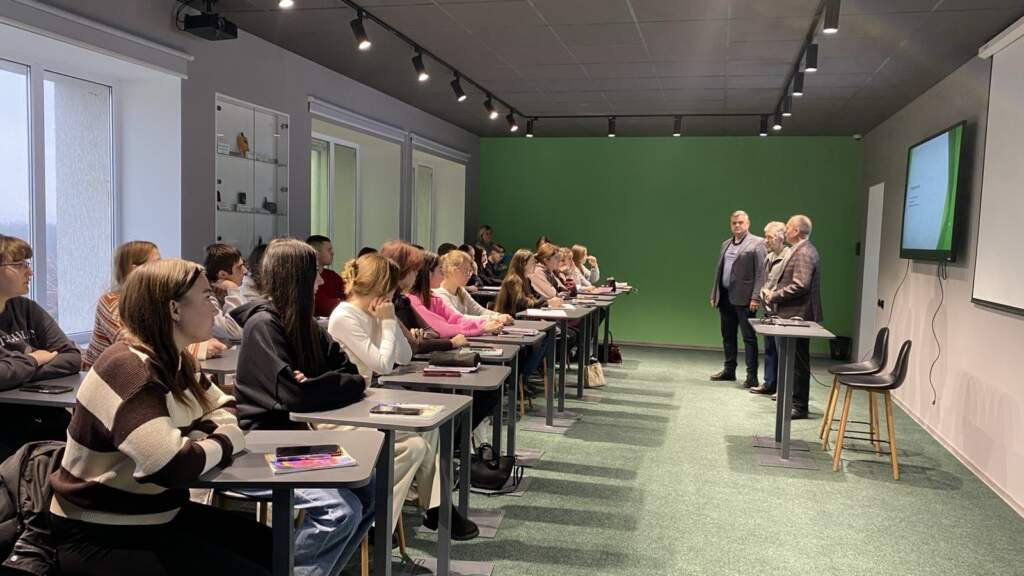
The event had a clear applied focus on introducing students to modern approaches to restoring ecosystems, increasing soil fertility, and purifying water bodies using integrated organic waste processing technologies. The lecture highlighted ways to rapidly reforest, restore lands degraded by war, and create and expand natural and urban ecosystems—parks, green zones along roads, coastal zones, and water areas.
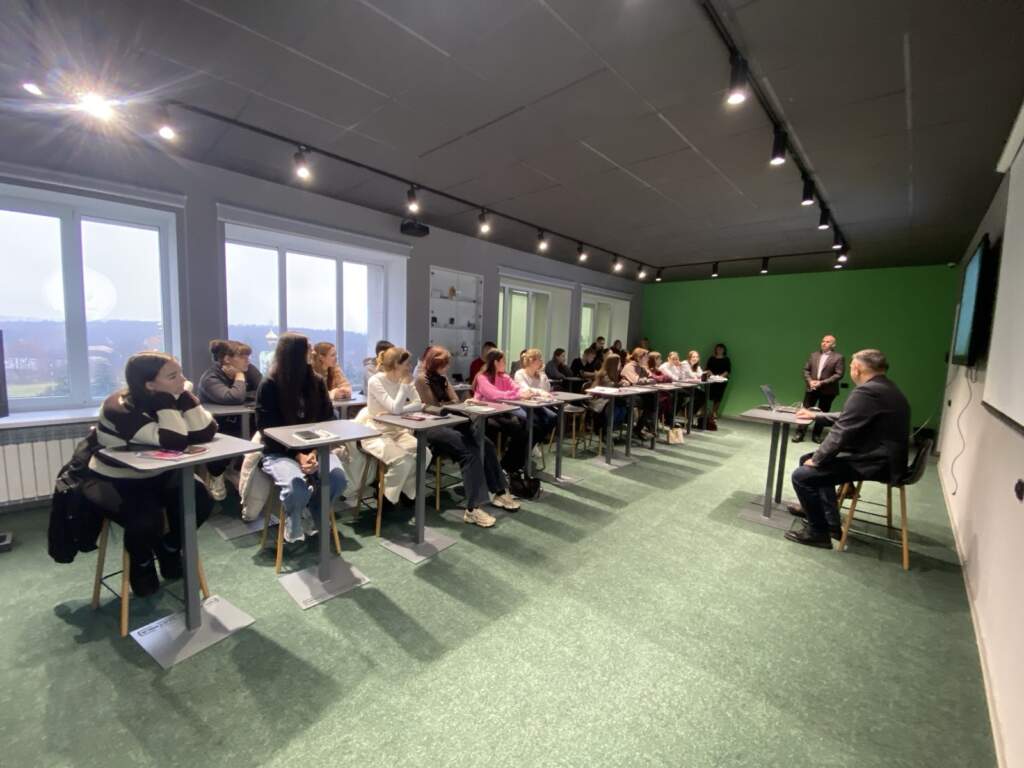
Particular attention was paid to practical solutions that are already being applied in Ukraine and can increase ecosystem resilience. Among them are technologies for composting, fermentation, and pyrolysis of organic waste as basic stages of soil cover restoration and water resource purification. Composting allows you to reduce the volume of organic waste, enrich the soil with bioorganic substances and microbiota, which increases the humus reserve and water permeability. Fermentation can provide energy and resource savings in the processing of biodegradable waste, creating useful biological products for agroecosystems. Pyrolysis, in turn, opens up opportunities for producing biochar and biofuels, which reduces greenhouse gas emissions and allows the fuel and energy complex to operate more environmentally friendly.
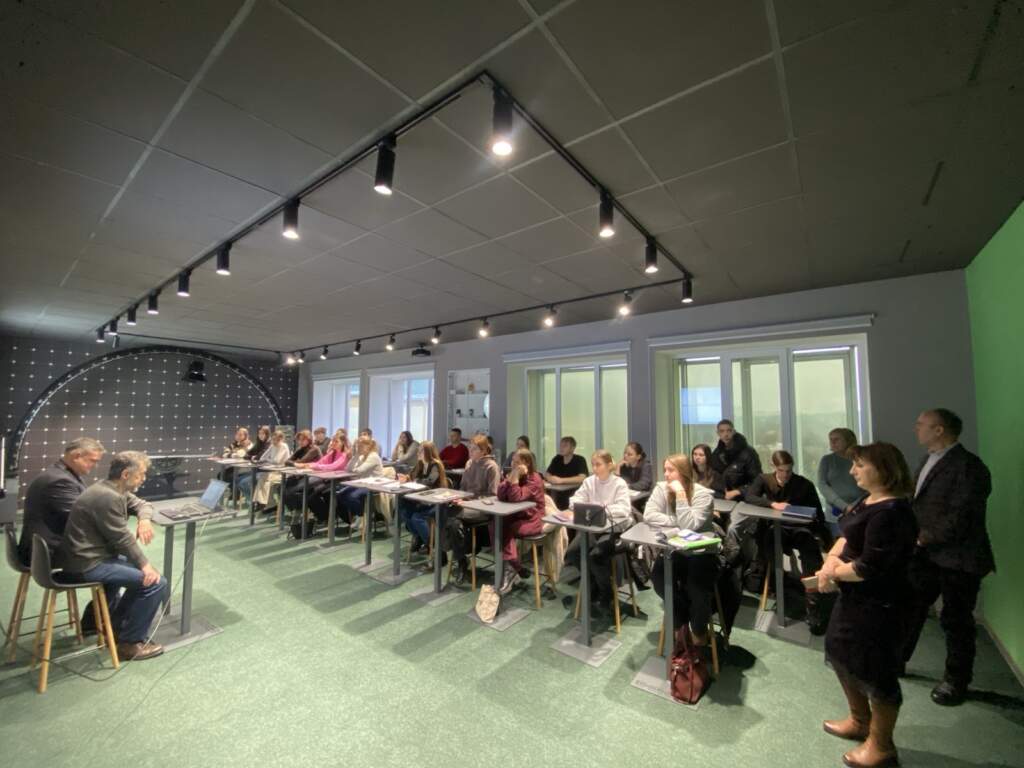
In the context of restoring degraded and war-affected lands, the lecture raised the issue of a holistic approach. Not only restoring the soil itself, but also restoring forest and aquatic ecosystems, creating new natural corridors for biodiversity, and implementing green infrastructure in the urban environment. In particular, practical steps were discussed for the conservation and reclamation of landfills, the restoration of disturbed lands through the use of composts and mineral fertilizers according to new environmentally safe schemes, as well as the possibilities of restoring water bodies and replenishing biodiversity through biofiltration and biotechnology.
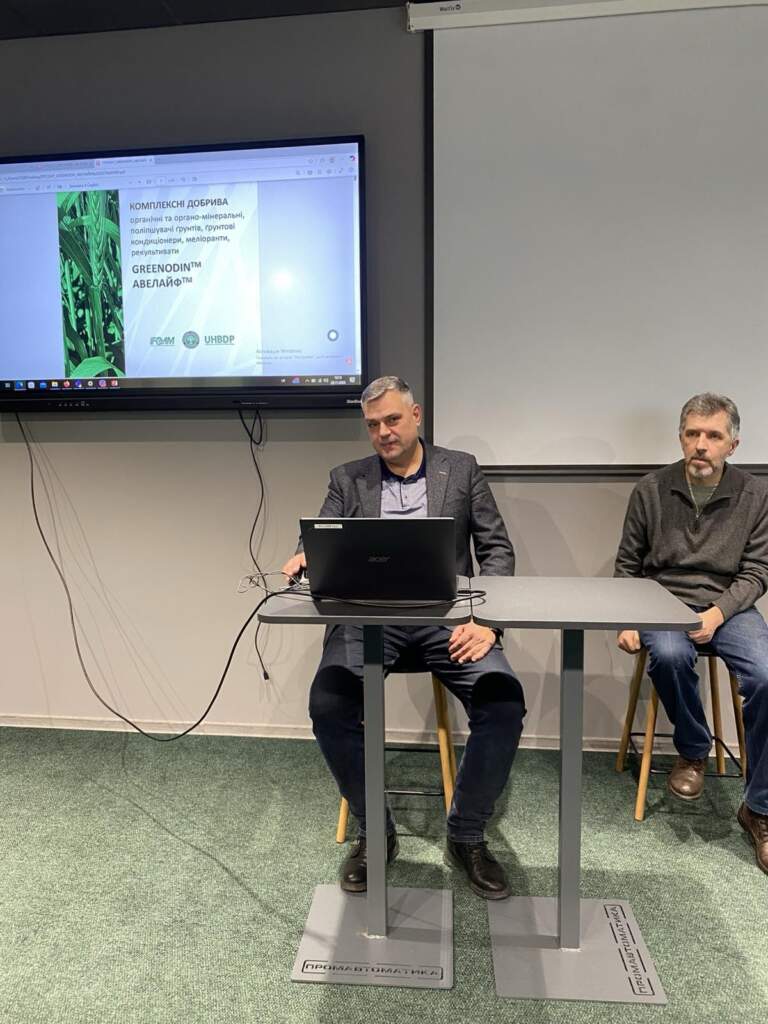
Oleksandr Surayev emphasized the need to increase organic matter to increase fertility on the basis of the use of digestate in Ukraine after fermentation of biomass (organic waste), drawing the students’ attention to the fact that the term “waste” should be renamed “secondary raw materials” in almost all industries due to the development of the circular economy. He also pointed out the importance of moving towards the concept of resource reuse and reducing the unit costs of extracting new materials.
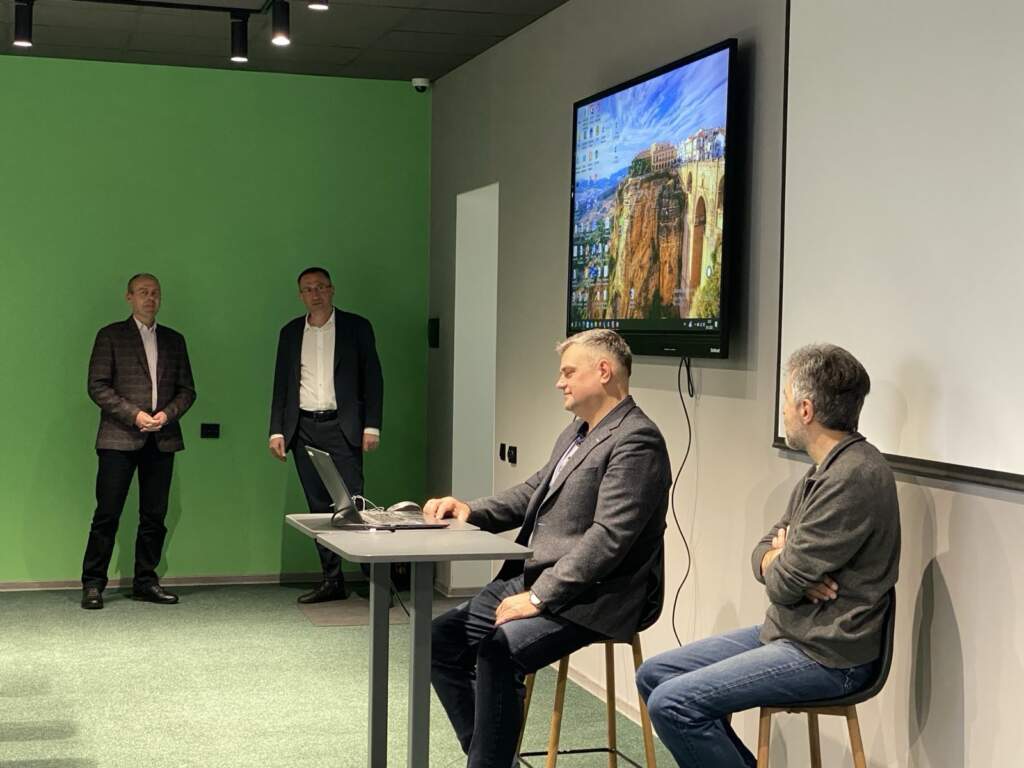
Tymur Lyevda supported Oleksandr Surayev for the urgent need to implement environmental solutions, in particular through the circular economy, and gave examples of the transformation of certain types of waste from the Vinnytsia region into organic and organomineral fertilizers, which are already successfully used in various regions of Ukraine. The discussion demonstrated how local initiatives can scale beyond the region, supporting agri-trade, agro-ecology, and sustainable development.
In the context of the educational process, the meeting was integrated into the disciplines of “Technoecology” and “Waste Treatment and Management”, allowing students to combine theory with practice and see real environmental solutions in action. The session sparked an active dialogue: students asked questions to the speakers, discussed examples of successful Ukrainian eco-projects, and ways to implement innovations in their future professional practices.
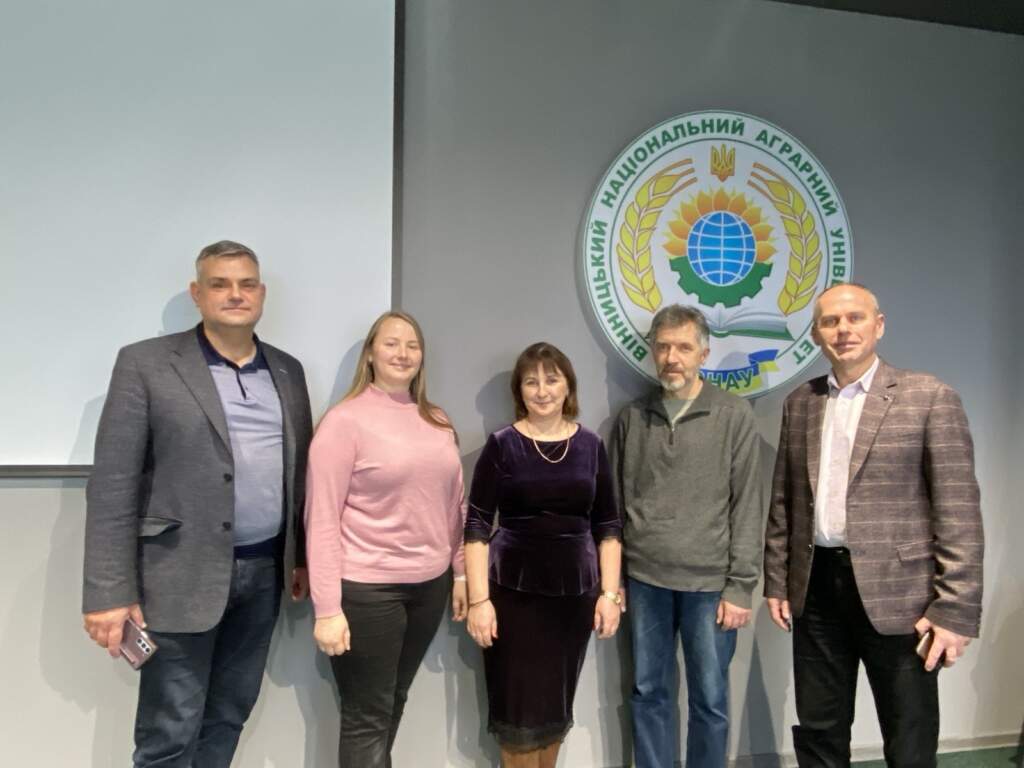
The Ukrainian practical solutions presented at the event demonstrate that local initiatives can have a large-scale impact. from cleaning and greening water bodies, restoring degraded lands, rational use of waste and turning it into valuable resources, implementing eco-improvement of urban areas, creating new parks and green corridors, and expanding existing nature conservation areas. Such areas correspond to current trends in global ecology and meet the needs of local communities, institutions, and businesses for sustainable development.
If you are interested in the topics of ecosystem restoration, recycling of various types of waste, and introducing innovations into agroecology, follow the following events and publications on our website avelife.pro
Greening agro is not a fad, but a reaction to the fact that excess nutrients are becoming a source of soil and water pollution, and biodiversity loss.

Digestate with biochar and glauconite is an innovative organo-mineral composite for reducing nutrient losses, prolonged plant nutrition, and increasing soil fertility.

Soil degradation and water pollution are increasingly merging into a combined environmental crisis, especially in arid and post-industrial regions.


