

Sunflower losses are a symptom of chemistry, not “just white rot”
Greening agro is not a fad, but a reaction to the fact that excess nutrients are becoming a source of soil and water pollution, and biodiversity loss.


Having read the publication about the discussion in Ladyzhyn of the risks of losing up to 50% of the sunflower crop due to white rot, it is worth paying tribute [1]. Farmers speak about the problem professionally and mention the “long life” of the infection in the soil, the importance of crop rotation, and the fact that “chemistry” alone cannot achieve a stable effect. But there is a key blind spot in the material, because they discuss the consequences, not the root cause.
We insist that the root cause is the degradation of the soil environment, namely its structure, moisture, biota, and buffering capacity, which classical agrarians often destroy with excess mineral salts and aggressive technologies. In such soil, pathogens are more comfortable than plants and beneficial biota.
Greening agro is not a “fashion”, but a reaction to the fact that excess “nutrients” become a source of soil and water pollution, biodiversity loss and climate emissions. In essence, these wastes clog certain links of the biocenosis, destroying such an ecosystem, which leads to erosion and soil degradation, and as a result, the development of “accelerators” of such processes that attack plants.
That is, the global trend is unambiguous: from “flooding” the field with salts to restoring the living soil system.
Fungicide is a “first aid” but the field loses season after season when:
In such a situation, any pathogen with a soil phase is not a “coincidence”, but a pattern.
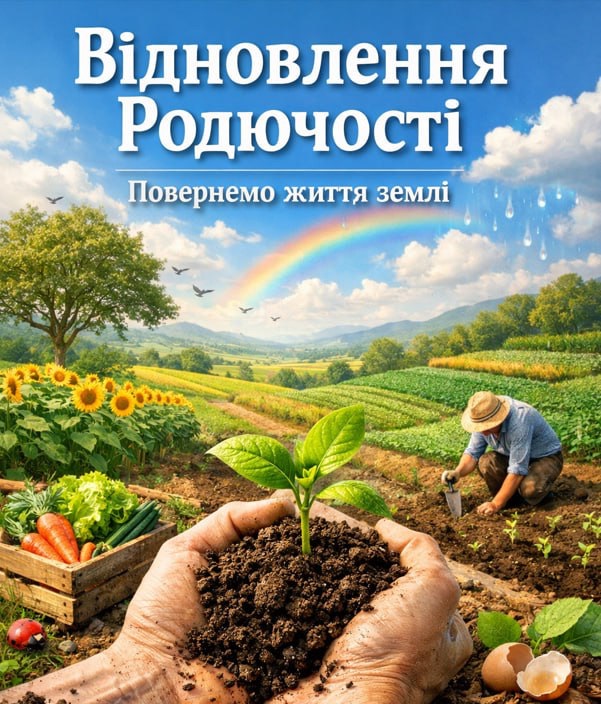
Our Institute of Nanotechnology and Organic Products “AveLife” works not with “symptoms on the leaves”, but with the system “soil → root → plant immunity → crop stability”.
We can do a quick diagnosis of a field (or several areas of a field) to answer the question: – “Why is the risk of rot so high here?”:
This provides the basis for technology, rather than “choosing a drug at random.”
Our solutions (GREENODIN GRAY / GREENODIN BROWN) cover the underlying causes of field vulnerability:
NB! We are not “replacing” the fungicide, we are making the fungicide work in a healthier environment where the plant has a real margin of safety.
Our approach is confirmed by our own developments in the field of organo-mineral fertilizers, including patented solutions, which makes it possible to adapt technologies to specific soils and farm economics – from intensive to organic.
Open offer for Ladyzhyn: “Anti-50%” field program with evidence
So that this doesn’t remain just beautiful text:
Because the main question is not “which drug is better?”, but “why does the field allow the loss of half of the crop at all?”.
The greening of agriculture in the world is about precision, biology, and soil restoration, not about romance. And here, literally next to Ladyzhyn, we have our Institute, which can get involved in the work so that in the coming seasons, we will not discuss “minus 50%”, but will discuss “plus stability”.
[1]: https://naparisi.com
[2]: Nutrients – Agriculture and rural development – European Union
[3]: Regulation – 2019/1009 – EN – EUR-Lex – European Union
Greening agro is not a fad, but a reaction to the fact that excess nutrients are becoming a source of soil and water pollution, and biodiversity loss.

Digestate with biochar and glauconite is an innovative organo-mineral composite for reducing nutrient losses, prolonged plant nutrition, and increasing soil fertility.

Soil degradation and water pollution are increasingly merging into a combined environmental crisis, especially in arid and post-industrial regions.


