


Epigenetic code and tetrapeptides in cell regulation
Analysis of the role of tetrapeptides in epigenetic regulation, telomeric biology, and modern translational biomedicine.


Tetrapeptides are low-molecular-weight bioregulators with a mass of up to 500 Daltons. Their molecular structure allows for passive diffusion through the nuclear membrane and interaction with the major groove of the DNA double helix. This provides precise modulation of the chromatin state without changing the primary nucleotide sequence.
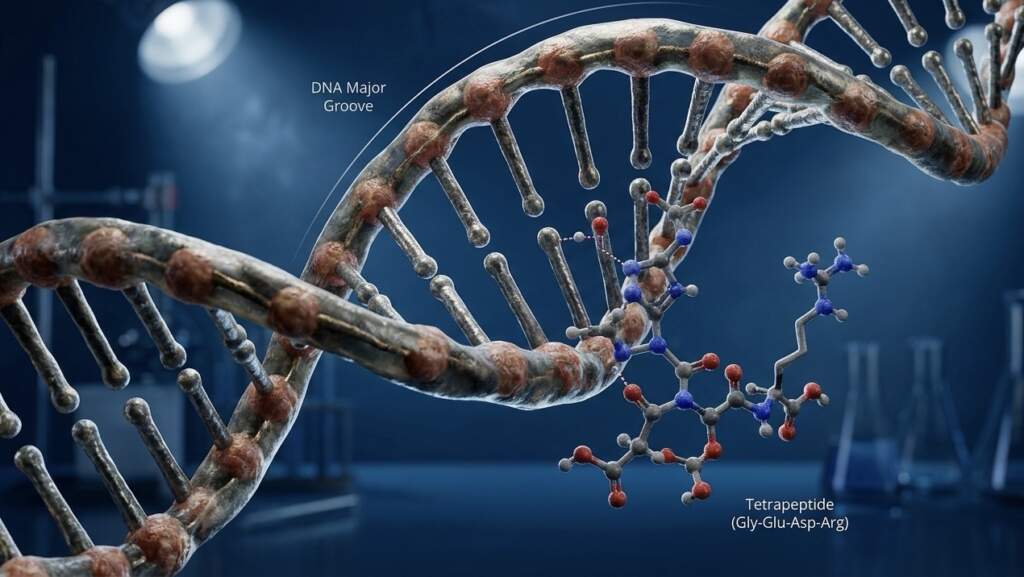
Tetrapeptides function as site-specific ligands for gene promoter regions. Interaction with nucleosomes initiates the transition of condensed heterochromatin into transcriptionally active euchromatin. The main epigenetic effect is the regulation of the methylation level of cytosine residues in CpG islands of promoters.
The AVELife Institute protocols are based on the creation of peptide chains with a given affinity for target genes responsible for the synthesis of antioxidant enzymes and heat shock proteins (HSPs).

The effectiveness of peptide therapy is determined by the degree of optical purity of the active pharmaceutical ingredient (API). The presence of foreign isomers blocks the receptor sites of DNA, reducing the therapeutic index of the drug.
The Institute has implemented a liquid-phase synthesis method using proprietary reagents for API synthesis. This provides:
In 2026, the capitalization of the short peptides segment is driven by the transition from general pharmacology to precision therapy. AVELife’s technology stack allows to reduce the R&D cycle of new APIs by 30% due to the use of pre-activated amino acid blocks.
Synthesis of tetrapeptides using AVELife protocols solves three key problems in the biotech market:
For biotech investors, this means having a scalable synthesis platform with low unit cost of product while maintaining pharmaceutical quality.
Tetrapeptide regulation is a critical tool in the therapy of neurodegenerative pathologies and age-associated diseases.
“We view organic synthesis of tetrapeptides not as a linear process, but as the creation of molecular keys. Our methodology minimizes racemization at the amino acid activation stage, which guarantees the identity of each molecule in the batch. This is critical for reproducing the epigenetic effect in clinical settings,” — Avelife
Analysis of the role of tetrapeptides in epigenetic regulation, telomeric biology, and modern translational biomedicine.

Scientific analysis of the interaction of tetrapeptides with the nucleosome apparatus. Technologies for the synthesis of high-purity API (>99.5%) according to the methodology of A. Demchenko.

A practical approach to implementing solutions at the interface of soil microbiome and silicon: diagnostics, field validation, common mistakes, and limits of expectations.