


Thermal depolarization of waste and energy efficiency ERVO
Technical analysis of depolarization (TDP) in an ERVO stack. Economics of organic waste processing and EROEI indicators. Expert assessment by Oleksandr Mospanenko.


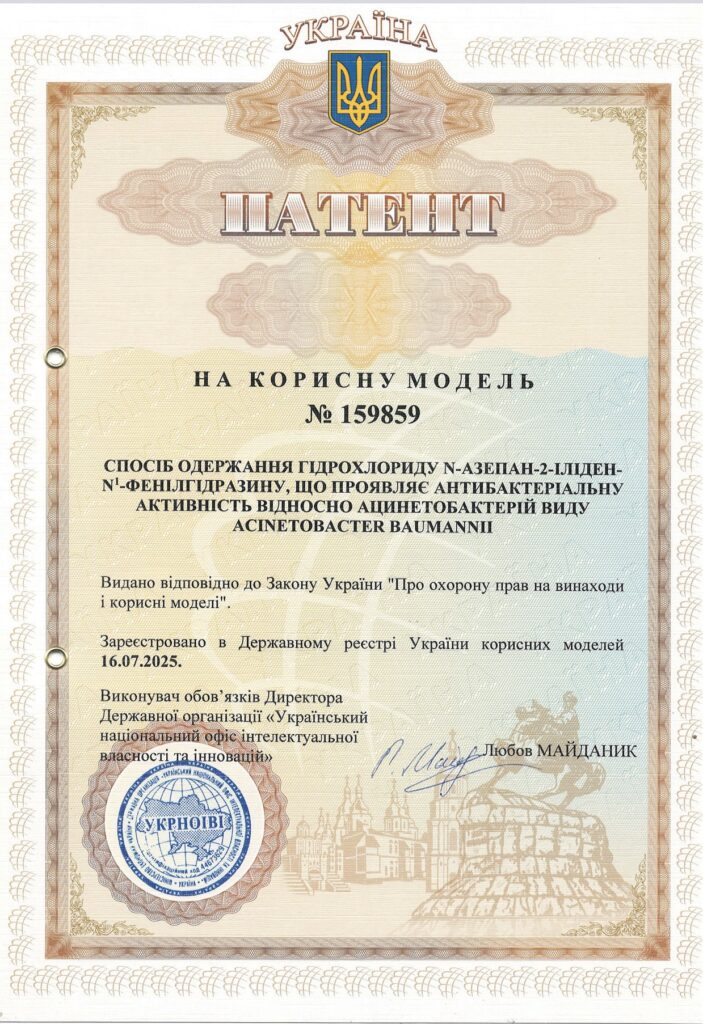
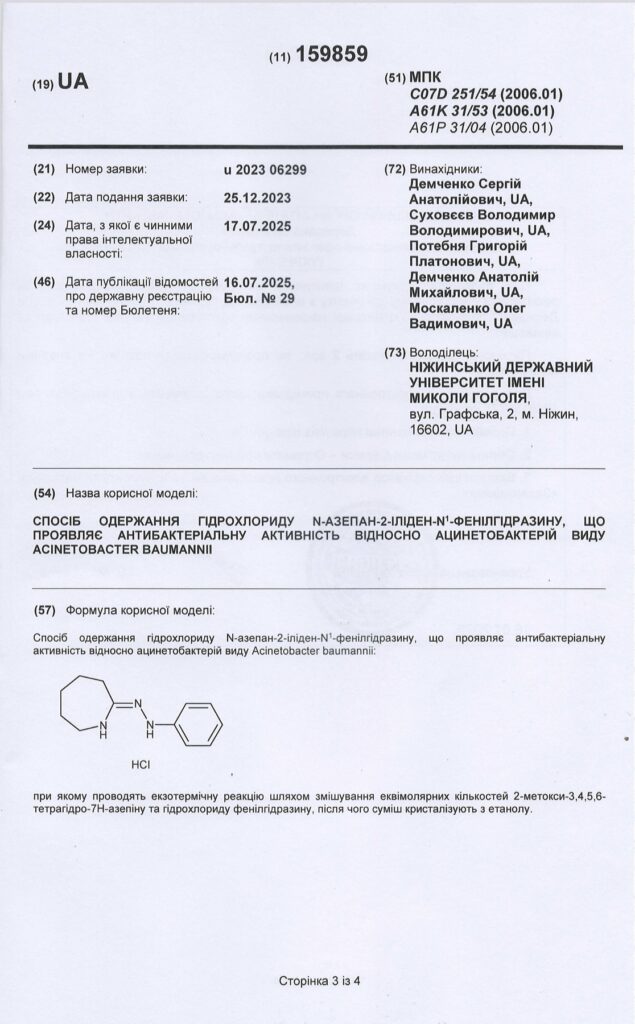
Our scientists have developed a new compound with high antibacterial activity against one of the most dangerous pathogens of nosocomial infections – Acinetobacter baumannii. The results are protected by patent No. UA 159859 U.
The compound N-azepan-2-ylidene-N’-(phenylpyrazolyl)hydrazone has been developed, which:
It should be noted that Acinetobacter baumannii is on the WHO list of global priority pathogens due to its ability to survive on medical equipment, resistance to many antibiotics, high mortality in immunocompromised patients, and prevalence in hospitals during wartime.
During the full-scale war in Ukraine, the number of serious injuries requiring long-term inpatient treatment has increased significantly. In such conditions, nosocomial infections have become one of the most common threats to wounded soldiers.
Among them, Acinetobacter baumannii is particularly dangerous, a bacterium known for its ability to:
to form multi- and pan-resistant strains, against which most standard antibiotics are ineffective.
According to Ukrainian studies, up to 90% of hospital-acquired infections in wounded are associated with gram-negative bacteria, in particular A. baumannii. Its prevalence in intensive care units and military hospitals has made it a key clinical problem.
In conditions of combat, where there is a massive use of antibiotics, particularly for prophylactic purposes, the likelihood of the formation of superbugs for which there are no drugs increases. Acinetobacter baumannii is already on the WHO priority list as one of the pathogens against which it is urgently necessary to create new antibacterial agents.
That is why the synthesis of a new active molecule with proven efficacy against A. baumannii is not only a scientific achievement, but also a practical response to the medical catastrophe unfolding in mobile hospitals and on the war front.
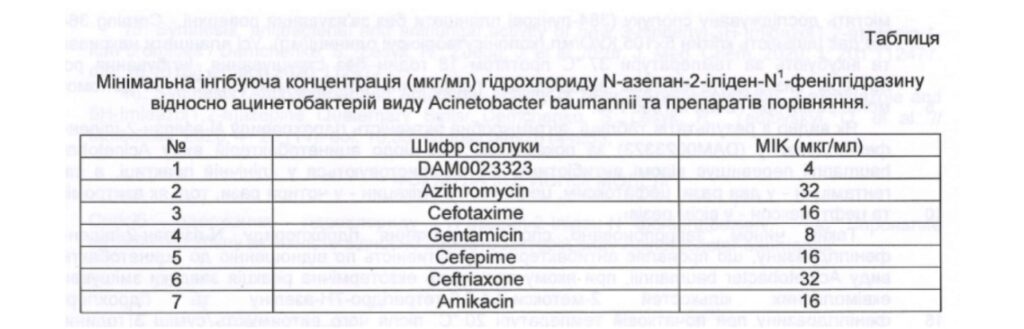
The new molecule was found to be 2–8 times more effective than the aforementioned antibiotics. The research was conducted in collaboration with the international platform CO-ADD (Australia).
Advantages and potential
This development is an important step in overcoming the antibiotic resistance crisis, especially in the context of the increase in infections during martial law. Ukrainian scientists once again prove their ability to create world-class innovative solutions.
Technical analysis of depolarization (TDP) in an ERVO stack. Economics of organic waste processing and EROEI indicators. Expert assessment by Oleksandr Mospanenko.

Resistance analysis of ESKAPE strains.. Methodology by A. Demchenko for C-level Pharma.

Scientific justification for the reclamation of technozems. Bioremediation based on glauconite according to patents of the AVELIFE Institute. Expert assessment by Timur Levda for agricultural holdings