Today, when war takes up most of the resources, it is difficult for entrepreneurs and innovators to independently finance the launch of large-scale technologies. However, this does not mean a standstill – the global innovation ecosystem has support mechanisms even in crisis regions.
International grants and support programs
Horizon Europe is the EU’s largest research program, funding projects in the field of green transformation, circular economy, and climate innovation.
EIC Accelerator — support for high-risk, high-impact technologies with the potential for global impact.
Eureka is an intergovernmental R&D cooperation program where Ukraine can be a partner in international consortia.
LIFE Programme is a European fund for environmental initiatives that has already financed Ukrainian startups in the field of eco-innovation.
It is important that even in 2022–2024, Ukrainian teams received funding, which proves that Europe is ready to invest in sustainability and ecology, despite the war.
Engagement strategy
Partnership with a foreign scientific center or business. They can apply officially on their own behalf, and we act as:
R&D participant (scientific performer),
subcontractor (performer of part of the technological work),
case study provider (Ukrainian implementation example).
Thus, we remain involved in the project, helping to obtain funding, technology, and experience in international cooperation.
We need to act now.
The funds have separate budgets for high-risk projects in crisis regions, because that’s where the strongest innovations are born. We can combine it with soil and water restoration.
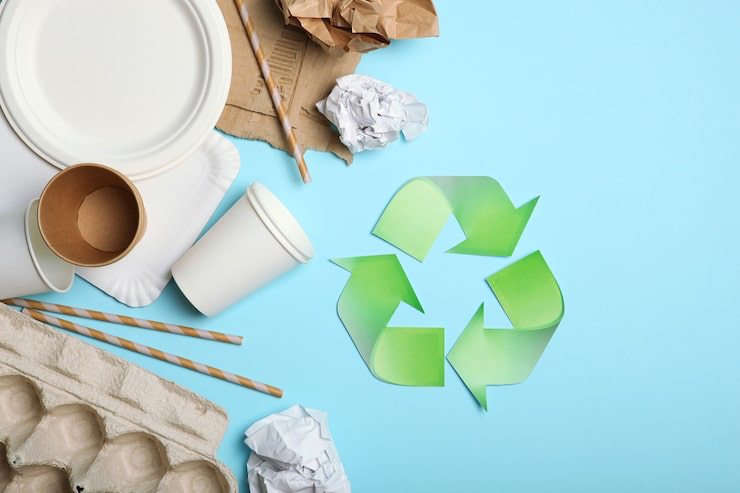
Recycling
Each application is not only an opportunity to receive a grant, but also the creation of an international network of contacts that can provide partners, investors, and sales markets.
Ukrainian environmental projects are now perceived as a dual contribution — both to post-war recovery and to the global fight against the climate crisis.
We are ready to assist in the preparation of such partnerships, applications and technological proposals. Complex projects are ready to be ecologically strengthened by renewing the fertility of affected soils, or cleaning them and water bodies that will be implemented around the projects.
Recycling in Ukraine can start now — even without its own large budgets, if international tools are used correctly.
Growing organic raspberries is always a balancing act between agronomy, climate, and soil biology. These factors were particularly acute in the 2024–2025 season, as weather conditions in central Ukraine were unstable and stressful for the crop.
The AVELIFE Institute of Nanotechnology and Organic Products is developing the direction of nanocellulose as a qualitatively different level of cellulose materials — not just a crushed, but a structurally reinterpreted form of a natural biopolymer.
If you look at organic farming more closely, it ceases to be a marketing label and opens up as a different logic of interaction with the soil. It feels like you are moving from a primitive game of fertilizer to a real strategy for managing a natural system, where the soil is a partner, not an object of influence.