


Restoring soil fertility for sugar beet (Rivne region)
Strategy for increasing sugar content and yield. Use of GREENODIN organo-mineral mixtures for the restoration of depleted lands.


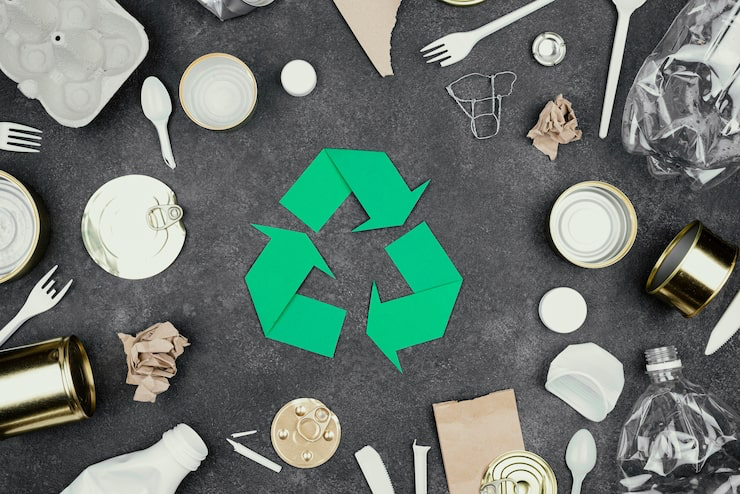
Circular economy is not just a trend, but a necessity
Modern industry is facing a simultaneous resource and waste crisis. The linear model of “extraction – production – use – waste” can no longer withstand either environmental or economic pressures.
The circular economy offers a fundamentally different logic—a closed life cycle of materials, where waste becomes a resource for new production. This is not a fad, but a strategic necessity for the survival of industry and the planet.
Our technology is a breakthrough in the recycling of various types of plastic and rubber. We have developed a solution that returns waste back into the industrial cycle.
Plastic and rubber are converted into primary raw materials compatible with petroleum.
This reduces the need for oil extraction and reduces dependence on primary petrochemicals.
Eliminates the need for waste incineration, which is a major source of dioxins and toxic gases.
Stops the accumulation of waste in the environment, turning it from a problem into a resource.
These are the important three “E’s”:
The future is circular technologies!
Such decisions should be:
We are open to cooperation and ready to solve specific problems in the field of recycling and circular economy.
Contact us and together we can make plastic waste, car tires, or oil waste the resource of the future.
Strategy for increasing sugar content and yield. Use of GREENODIN organo-mineral mixtures for the restoration of depleted lands.

How to grow sugar beet at pH 8.0. Fertilization technology, combating phosphorus and moisture deficiency in the Rivne region.

Learn why fertilizers don’t work and how Greenodin increases the bioavailability of nutrients. Practical tips and case studies for farmers.