
WordPress WooCommerce Themes

CRISPR and Gene Therapy: Purity of Peptide Support API

Precision of CRISPR editing: Impact of stereochemical purity of peptide delivery vectors

The clinical implementation of the CRISPR-Cas9 system in 2026 is determined by the transition from viral vectors to non-viral delivery systems based on amphiphilic peptides (CPPs). Scientific reviews in Nature Genetics confirm: the precision of genome editing directly depends on the chemical homogeneity of the peptide support. Any microimpurities in the API support initiate uncontrolled kinetics of the ribonucleoprotein complex (RNP), increasing the risk of off-target mutations.

Functional role of peptide ligands in nuclear translocation

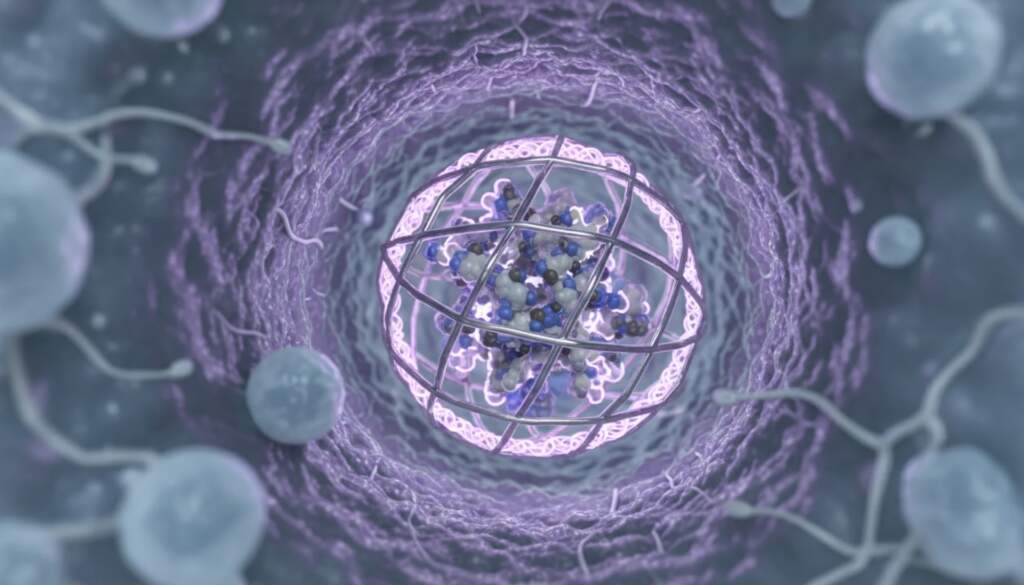
Peptide vectors provide stabilization of the Cas9-gRNA complex and its protection from endogenous nucleases. The key step is endosomolytic activity – the ability of the peptide to destabilize the endosome membrane to release the RNP complex into the cytosol.

The presence of foreign isomers or protecting group residues in the peptide chain distorts the conformation of nuclear localization signals (NLSs). This blocks the interaction with importins, reducing the efficiency of editing in target cells.

Avelife synthesis standards

The immunogenicity problem of gene therapy products is often caused not by the Cas9 protein itself, but by technological impurities in the peptide support. Avelife develops synthesis protocols that eliminate these risks through precise control of reagents.

  • Chiral purity: Elimination of racemization of amino acids at the carboxyl group activation stage ensures the production of optically pure peptides (>99.8%).
  • Nitrosamine control: The use of specific reagents for the synthesis of APIs produced by AVELife eliminates the formation of genotoxic impurities at the ppm level.Nitrosamine control: The use of specific reagents for the synthesis of APIs produced by AVELife eliminates the formation of genotoxic impurities at the ppm level.%MCEPASTEBIN%
  • Purification steps: The use of preparative HPLC methods allows the removal of defective peptides (des-sequences) that would otherwise compete for receptor binding.

Institute comment: “We view peptide guidance as a digital instruction for CRISPR. If there is even one chirality error in the molecular chain, the instruction is read incorrectly. Our synthesis architecture guarantees the identity of each molecule in a batch, which is critical for the safety of phase II clinical trials.”

Regulatory compliance and scaling for the biotech market

The use of pharmaceutical-grade peptide vectors from AVELife provides:

  1. Minimization of off-target effects: Stable affinity of the pure peptide to the RNP guarantees predicted localization of the editor.
  2. Reduced immunogenicity: The absence of adjuvant impurities allows repeated administration of the drug without activation of neutralizing antibodies.
  3. Acceleration of FDA/EMA certification: Full analytical transparency of reagent synthesis meets the updated requirements for gene therapy drugs in 2026.

Precision gene therapy requires absolute purity of peptide tools. AVELife Institute API synthesis standards create conditions for safe correction of genetic defects on an industrial scale.

Sources and scientific verification:

Add comment

Your email address will not be published. Required fields are marked

Don't forget to share