

WordPress WooCommerce Themes

Right to Repair 2026: How the New Service Economy is Destroying Planned Obsolescence

The “Right to Repair” and the End of the Era of Disposables: The 2026 Economic Manifesto

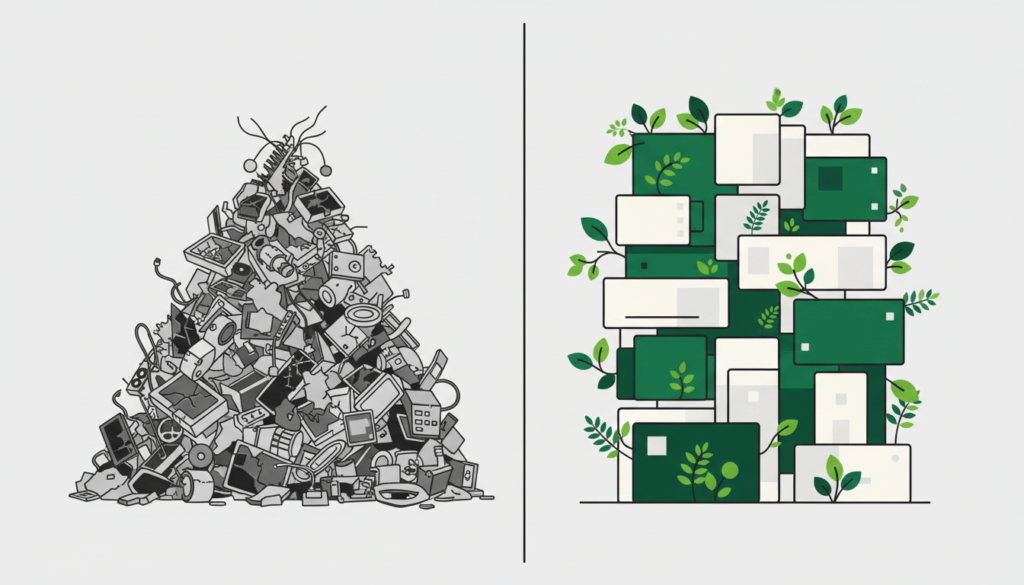
The world is experiencing a tectonic shift in the consumption paradigm. While for the past 50 years the global economy has been based on the “production – linear use – landfill” model, today we are witnessing the birth of the Maintenance Economy. Legislative initiatives in 2025–2026 in the EU and the US will effectively criminalize “planned obsolescence”, transforming repair from a forced action into a new symbol of elite consumption.

1. Legislative Foundation: The End of the Dictatorship of Corporations

In 2024-2025, the European Parliament finally approved the Right to Repair Directive. According to the document, manufacturers are obliged to:

  • Provide access to original spare parts for 7–10 years after the model is discontinued.
  • Provide repair instructions not only to authorized centers, but also to independent workshops and end consumers.
  • Prohibit software that blocks the operation of the device after replacing parts with third-party components (so-called “part pairing”).

Similar laws are already in effect in the states of California, New York, and Minnesota, forcing global brands such as Apple and Samsung to unify their approaches to technology design.

2. Maintenance Economy: Why service is becoming the “new luxury”

Instead of encouraging frequent purchases, the market is shifting towards durability. This is creating new niches:

  • Modularity as the standard: Devices like Framework laptops or Fairphone smartphones are becoming mainstream. The ability to replace just the camera module or processor instead of buying a new gadget is not only a cost-effective solution, but also a manifestation of the technological intelligence of the consumer.
  • PaaS (Product-as-a-Service) model: Big home appliance brands (e.g. Philips and Bosch) are testing subscription-based usage. You pay for “clean clothes” (wash cycles), not for the washing machine. In this model, it is profitable for the manufacturer to build appliances that work for decades without breaking down.
  • Renovation as status: Restoring vintage items and upgrading existing devices is becoming a form of conscious luxury. It is a counterpoint to the fast food culture of cheap mass market.

3. Resource pragmatism: Why is it economically beneficial?

The transition to maintainability is driven not only by environmental concerns, but also by a critical shortage of resources.

  1. Rare Earth Shortage: According to the International Energy Agency (IEA), demand for lithium, cobalt, and neodymium is growing exponentially. Mining is becoming more expensive and logistics are becoming unstable. Recycling and remanufacturing are the only ways to stabilize prices.
  2. Combating e-waste: The world generates over 62 million tons of electronic waste each year (Global E-waste Monitor). Only 22% of this is recycled properly. The Right to Repair could reduce this by 15–20% in the first three years of the law.

Conclusion: The Role of the AVELife Institute

We at the AVELife Institute are confident that the future lies in the regenerative economy.

Supporting repair legislation is not a constraint on business, but a stimulus for innovation in materials science and design. We are moving from a world where things own us to a world where we responsibly own things.

Add comment

Your email address will not be published. Required fields are marked

Don't forget to share