


Thermal depolarization of waste and energy efficiency ERVO
Technical analysis of depolarization (TDP) in an ERVO stack. Economics of organic waste processing and EROEI indicators. Expert assessment by Oleksandr Mospanenko.


The global organic market is moving beyond a niche to a structured sector with its own complex economics. In 2026, investments in organic farming can no longer be seen solely through the prism of premium prices. They have become an investment in the sustainability of the business model in the face of increased regulatory pressure (EU Farm-to-Fork), decarbonization of supply chains (Scope 3) and the increasing degradation of conventional agricultural systems. The key challenge this year is the lack of capital for transformation, accompanied by a sharp increase in demands for transparency and quantitative measurement of environmental impact. We analyze how investment theses are changing, where new sources of margin lie, and which operational risks are becoming critical for COOs and CFOs.
An analysis of several European organic agricultural holdings that were actively expanding in 2022-2024 revealed a systemic error: a focus on increasing area (hectares) without a parallel deep integration of regenerative practices. Consequences in 2025:
The investment attractiveness of organics in 2026 is determined by the depth of the transformation of operational processes.
Instead of massive investments in new equipment, leading farms are refocusing on improving the TCO (Total Cost of Ownership) of existing assets through preventive maintenance and precision farming. Investments are being made in soil monitoring sensors and agro-drones for point-of-care application of biological products.
The Health Index is becoming a measurable indicator that impacts business value. Investments in regenerative agriculture (cover crops, zero-till, agroforestry) serve two purposes: increasing long-term productivity and generating carbon credits. This is a new asset class that monetizes environmental impact.
Certification costs (EU/USDA) are being redefined. Integrated digital field diary platforms automate up to 70% of audit work. Investments in such SaaS solutions dramatically reduce operational risks and the cost of maintaining the standard.
Organic produce, especially fruits and vegetables, has a higher risk of spoilage. Investing in your own or partner logistics hubs with a controlled atmosphere is not an expense, but a way to protect the high margin of the finished product and enter the export market.
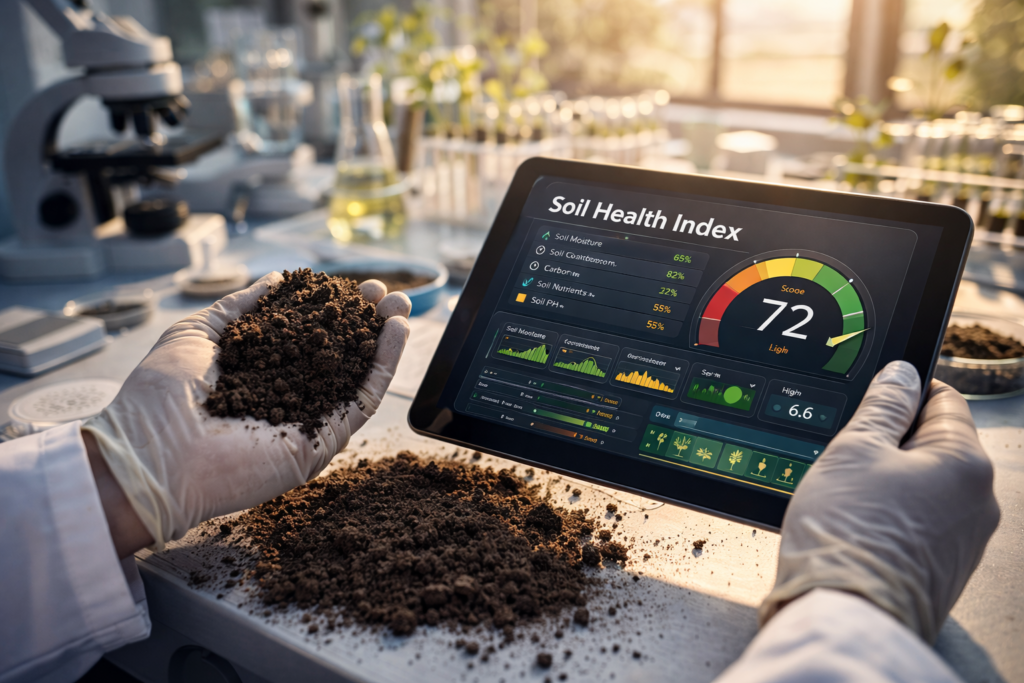
1. European Commission, Farm to Fork Strategy – Confirms regulatory pressure and EU policy goals to increase organic land area, which forms a long-term investment context.
2. FAO, The State of the World’s Land and Water Resources – Provides data on soil degradation, which is a key driver of investment in regenerative and organic practices from an asset conservation perspective.
3. Soil Health Institute, Report on the Economics of Soil Health – Provides specific cases and data on financial benefits (increased yields, reduced costs) from investments in soil health, the basics of organic farming.
4. IFOAM Organics Europe, Market Data – An authoritative source of market data on the European organic sector, including demand and price dynamics, which is critical for investment calculations.
Technical analysis of depolarization (TDP) in an ERVO stack. Economics of organic waste processing and EROEI indicators. Expert assessment by Oleksandr Mospanenko.

Resistance analysis of ESKAPE strains.. Methodology by A. Demchenko for C-level Pharma.

Scientific justification for the reclamation of technozems. Bioremediation based on glauconite according to patents of the AVELIFE Institute. Expert assessment by Timur Levda for agricultural holdings