


Thermal depolarization of waste and energy efficiency ERVO
Technical analysis of depolarization (TDP) in an ERVO stack. Economics of organic waste processing and EROEI indicators. Expert assessment by Oleksandr Mospanenko.


In nature, organic residues can take millions of years to “ripen” into oil. Humanity, of course, does not have that much time — but it does have engineering. Thermal Depolymerization (TDP), or thermal depolymerization, is a process that uses temperature, pressure, and water (the so-called hydrous pyrolysis) to break down long organic molecules into shorter hydrocarbon chains suitable for producing energy carriers.
This is not magic, but very pragmatic chemistry: instead of dumping waste into landfills (where it produces methane, toxic leachates, and eternal problems), we turn it into resources.
Thermal depolymerization is the thermo-chemical processing of organic waste in a water environment at high temperatures and pressures.
Classical pyrolysis usually proceeds without water (in an inert environment or with a minimum of oxygen). In contrast, thermal depolymerization uses water as the reaction medium. This allows for better control over the decomposition of polymers and organics, as well as improving the quality of the final products. This is especially important for the processing of “wet” waste (sewage sludge, biomass, manure), since their preliminary drying is energy-intensive and economically unprofitable. [1]
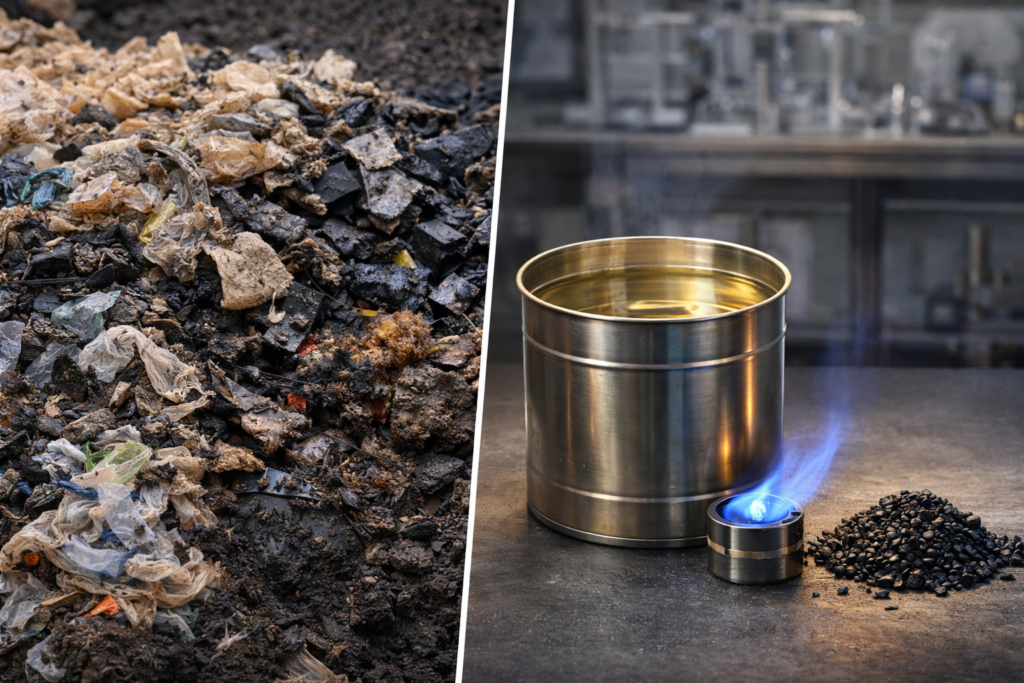
TDP/depolymerization technologies are critically important in today’s environment for several reasons. They not only solve the problem of disposal, but also create new economic opportunities. According to research, waste processing using thermochemical methods can significantly reduce landfill volumes and associated greenhouse gas emissions. [2]
Current reviews emphasize that the integration of such technologies is key to regional energy security and environmental sustainability. [3]
At AVELIFE, we view waste recycling not as “disposal” but as restoring the balance of materials and energy in communities. Our approach is based on modern engineering solutions described in the specialized literature on waste and resource management. [4]
ERVO is a direction that we are developing as a mobile/modular plant capable of processing plastic, rubber, and sedimentary waste into energy using catalytic depolymerization and pyrolysis.
· we also work with the destruction of polymer chains to useful fractions; · we obtain liquid fuel, gas (for autonomous energy supply of the process) and solid carbon residue; · approach — modularity + autonomy + applied benefit for communities.
According to our experience within ERVO, the unit can produce up to ~60 liters of fuel from 100 kg of raw material (depending on composition and operating conditions), and the gas fraction is used to maintain the energy balance of the unit. This correlates with the efficiency data of similar systems given in technical reports and analytics. [5]
· communities (local waste recycling without “take it out and forget it”); · agroclusters (production waste + energy autonomy); · infrastructure and logistics hubs; · dual-purpose facilities where energy sustainability is critical.
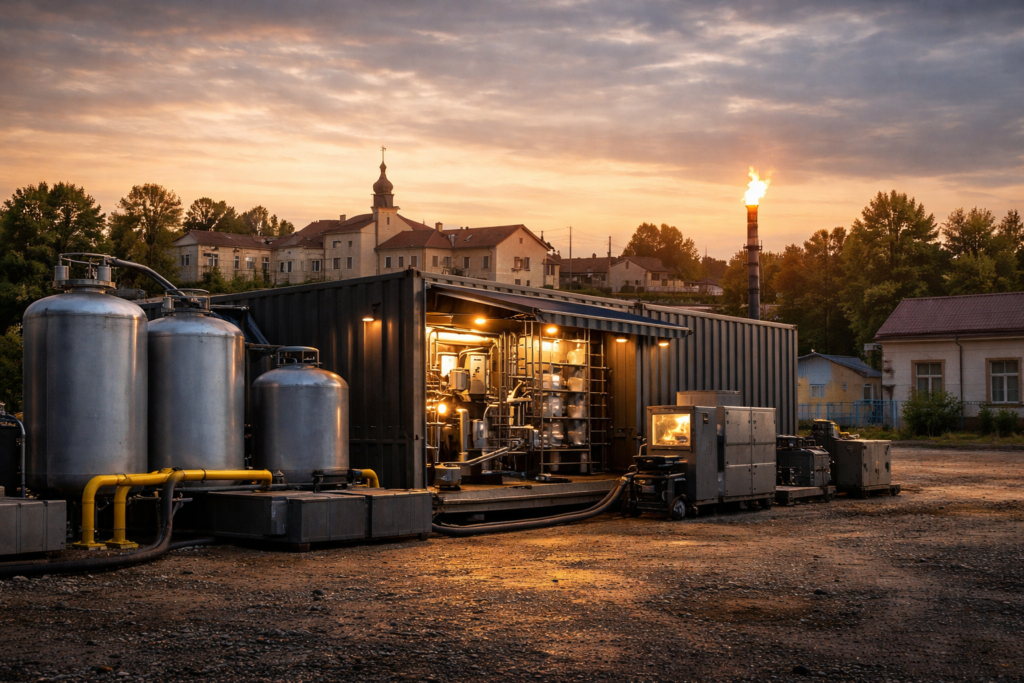
Ukraine simultaneously has:
Thermal depolymerization class technologies are all about turning a problem into an asset. Implementing such systems allows you to get:
· less landfills and disposal costs; · more local fuel/energy; · fewer emissions and toxic effects; · new local jobs.
According to analytical materials, decentralized modular installations are the most promising for countries with transition economies and high density of agricultural production. [6]
For AVELIFE ERVO, it is not an isolated “device”, but a brick in a larger architecture:
· waste processing → energy → community stability; · organics/sediment processing → reduction of environmental burden; · carbon residues/sorbents → potential for environmental applications (including in conjunction with other Institute solutions).
We are moving towards a model where waste becomes a resource, and the community is not a “consumer of services” but the owner of the cycle.
AVELIFE is open to:
· ERVO pilots at community/cluster level; · partnerships with enterprises with plastic/rubber/sediment waste streams; · investment and production cooperations to scale up modular solutions.
Technical analysis of depolarization (TDP) in an ERVO stack. Economics of organic waste processing and EROEI indicators. Expert assessment by Oleksandr Mospanenko.

Resistance analysis of ESKAPE strains.. Methodology by A. Demchenko for C-level Pharma.

Scientific justification for the reclamation of technozems. Bioremediation based on glauconite according to patents of the AVELIFE Institute. Expert assessment by Timur Levda for agricultural holdings
One comment
Pingback:
Термічна деполяризація відходів та енергоефективність ERVO - avelife.pro