

Returning life to the desert
Ecological breakthrough in combating desertification: artificial cultivation of biological crusts (biocrusts) in the deserts of the PRC. Accelerated bioremediation technology from AVELife.


Mechanically stopping the shifting sands is only the first, superficial stage of combating the degradation of arid lands. The real problem of desert and semi-desert landscapes is not only the shortage of water, but also the fact that the surface layer of sand is often biologically poor: it is almost devoid of a stable microbiome, organic matter, structural aggregates and natural moisture retention mechanisms.
That is why simply planting drought-tolerant plants in bare sand often ends in their death. The root system of a young plant finds itself in an environment where there is neither constant moisture, nor available nutrition, nor the microbial support that in natural soils helps plants survive drought, salt and temperature stress.
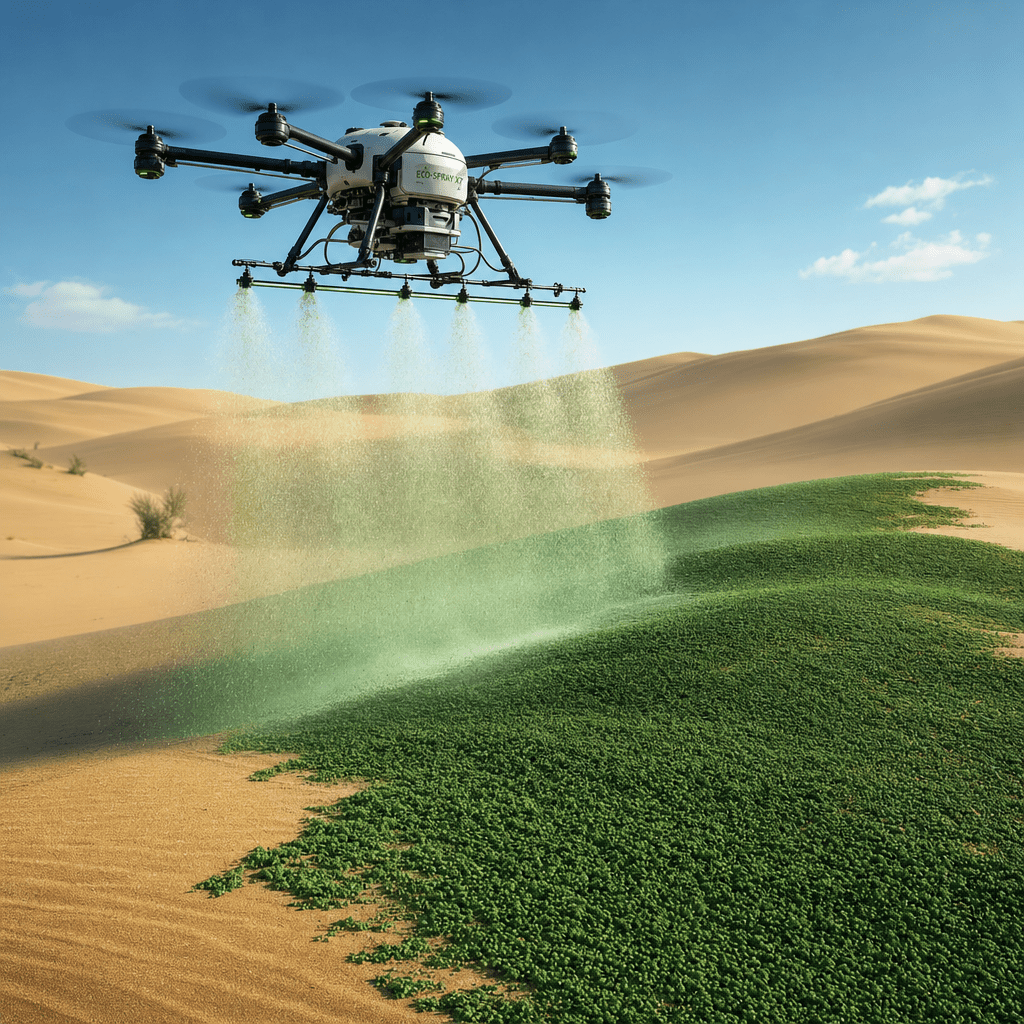
In 2025–2026, Chinese work on artificially accelerated formation of biological soil crusts, or biocrusts, attracted particular attention. The Chinese Academy of Sciences described an approach in which cyanobacteria are not simply applied to the surface of sand, but are introduced into the gaps between grains of sand or converted into solid “soil seeds” for transportation and sowing. According to CAS, this approach allowed to reduce crust formation from the natural approximately 15 years to 1–2 years and achieve survival of over 60% in field conditions. (Chinese Academy of Sciences)In 2025–2026, Chinese work on artificially accelerated formation of biological soil crusts, or biocrusts, attracted particular attention. The Chinese Academy of Sciences described an approach in which cyanobacteria are not simply applied to the surface of sand, but are introduced into the gaps between grains of sand or converted into solid “soil seeds” for transportation and sowing. According to CAS, this approach allowed to reduce crust formation from the natural approximately 15 years to 1–2 years and achieve survival of over 60% in field conditions. (Chinese Academy of Sciences)
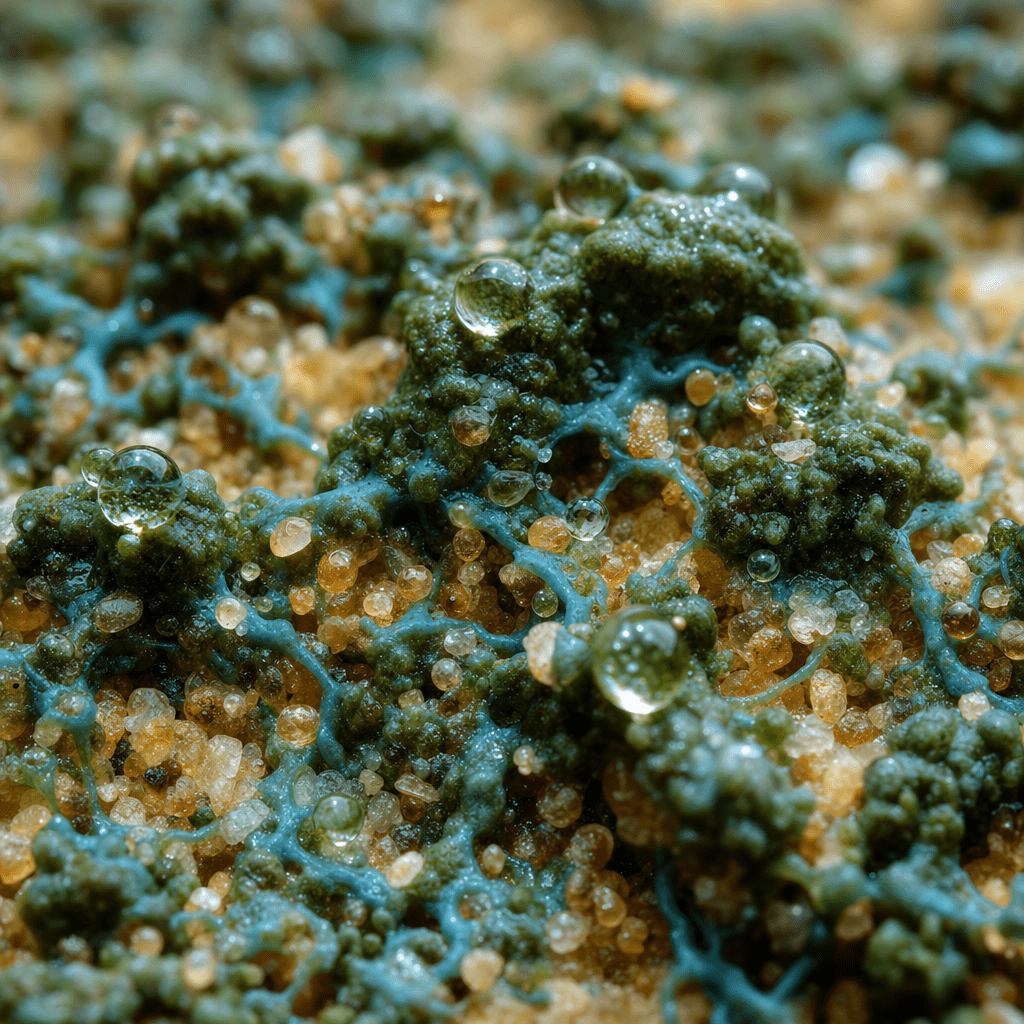
Under natural conditions, a thin living organo-mineral layer forms on the surface of desert sand over time. It consists of a consortium of microorganisms and lower plant forms:
cyanobacteria, microscopic algae, bacteria, fungi, mosses, lichens.
This layer can be called the “ecological skin” of the Earth. It stabilizes the surface, reduces wind erosion, accumulates the first organic substances, promotes the formation of microaggregates and gradually prepares the sand for plant colonization. Scientific studies confirm that inoculation with cyanobacteria can form biocrusts on different types of soils, increasing their stability, content of organic carbon, nitrogen and exopolysaccharides. (Frontiers)
A key mechanism is the ability of cyanobacteria to form filamentous structures and secrete exopolysaccharides, natural polymers that act as biological “glue.” They bind sand microparticles, promote the formation of aggregates, and create a primary structure where there was previously only a loose mass. The properties of this polysaccharide matrix significantly affect the success of sand colonization, so for practical projects it is important to select not random, but specially adapted strains. (Frontiers)
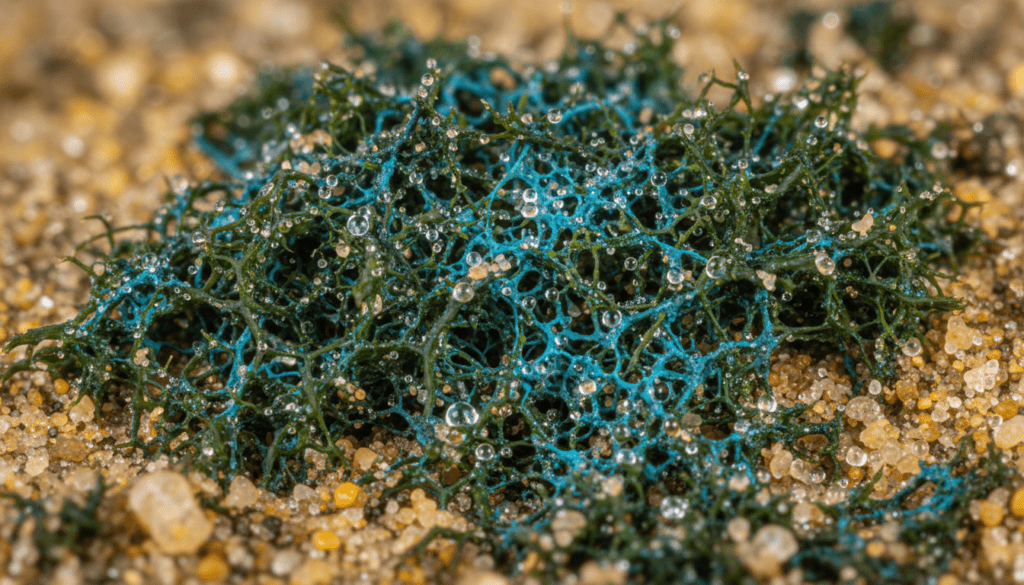
One important practical clarification is that cyanobacteria cannot be considered as a simple drug that can be sprayed on the surface of a dune. Chinese researchers pointed out that when cyanobacteria were simply transferred to a wild desert, the moving sand grains destroyed the thin biofilm, and it disappeared in less than a week. That is why the approach of introducing microorganisms into the gaps between the sand grains or creating a solid “soil seed” became more promising. (Chinese Academy of Sciences)
This is a very important conclusion for practice: life in the desert must not simply be “sown,” but protected in a mineral-biological matrix.
In parallel with the biological direction, an interesting experience was shown by the Netherlands in the United Arab Emirates. At Expo 2020 Dubai, the Dutch pavilion demonstrated the SunGlacier system, a technology for obtaining water from desert air using renewable energy. Over the six months of the Expo, the system collected more than 150,000 liters of water, and on a good day could produce more than 1,200 liters. This water was used for internal “rain” and irrigation of plants in the pavilion. (Netherlands and you)
Another Dutch development is Cocoon from Land Life Company. It is a biodegradable, water-efficient tree incubator designed for planting in poor and arid soils. Its logic is not to constantly water the desert, but to give the seedling a protected starting microclimate and the opportunity to form a deeper root. (expo2020dubai.com)
The Groasis Waterboxx / Growboxx technology has a similar logic: a local water-retaining capsule is created in the plant, which reduces water loss and supports the seedling during the critical period of establishment. According to the developer, the technology is aimed at transforming degraded lands into productive ones using significantly less water compared to drip irrigation. (waterboxx.com)
In our opinion, the most promising is not the separate use of one technology, but their combination into a single system for the restoration of arid lands.
Cyanobacterial biocrust solves the surface problem: it stabilizes sand, reduces dust drift, accumulates primary organic matter, and triggers microbial colonization.
Water harvesting and condensation solutions like SunGlacier demonstrate that even in desert air there is a moisture resource that can be locally harnessed to support plants.
Seedling incubators like Cocoon, Waterboxx or Growboxx create a protected starting area for the root.
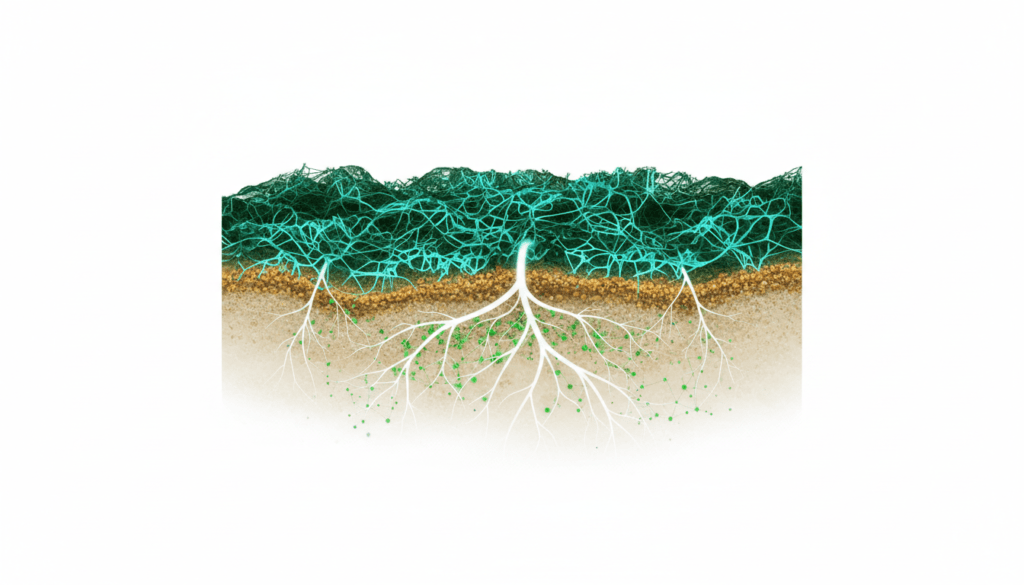
And organo-mineral complexes such as GREENODIN can become the biomineral basis that will connect the surface biocrust with the root zone of the plant.
The Institute of Nanotechnology and Organic Products “AVELIFE” considers the technology of artificial bio-surfacing as an important confirmation of our basic doctrine:
Our previous work on restoring fertility, cleaning water bodies, bioactivation of bottom sediments, the use of glauconite, biochar, humic acids, fulvic acids, and beneficial microorganisms shows a common logic: a degraded environment cannot be restored only mechanically. It must be returned to the biological cycle.
That is why technology for deserts should consist not of a single drug, but of a multi-level system:
1. Surface bioprotection Creating an artificial biocrust based on native, non-toxigenic and drought-tolerant strains of cyanobacteria, preferably in combination with fungi and other beneficial microorganisms. A 2024 study showed that co-inoculation of desert cyanobacteria and fungi can enhance the formation of a complex crust, increase microbial biomass, soil nutrient content, enzymatic activity and humification processes. (Frontiers)
2. Mineral framework The use of natural minerals — glauconite, zeolite, basalt fiber, clay minerals, biochar — to retain moisture, cation exchange, adsorb nutrients, and create an environment for microorganisms.
3. GREENODIN Root Biomineral Zone GREENODIN can act not only as a fertilizer, but also as a bioactive ameliorant: forming a biomineral matrix in the future root zone, supporting beneficial microorganisms, improving moisture retention, reducing plant stress, and accelerating the transition from dead sand to living soil.
4. Water-retaining capsule for seedlings Local use of biodegradable “incubators” for plants, similar to Cocoon or Growboxx, allows you to not waste water on the entire area, but to direct it to where the future root is formed.
5. Gradual plant colonization After stabilizing the surface, it is advisable to plant not random ornamental crops, but local xerophytic, halophytic, fodder, shrub and tree species capable of maintaining long-term ecosystem balance.
In general, such a technology might look like this:
sand → biocrust → biomineral matrix → root zone → pioneer plants → living soil → sustainable landscape.
This is not just a fight against desertification. It is the launch of a new succession—a controlled natural process where microorganisms, minerals, water, and plants work as a single system.
In this approach, cyanobacteria are not the final greener, but the first living engineer. They create a surface “skin” of the soil. GREENODIN and biomineral complexes form a deeper root base. Water-retaining capsules help the seedling survive the critical period. And then nature itself, if it creates the right conditions, begins to restore the cycle of life.
Desert, semi-desert, and arid areas of the future require not just one technology, but an integrated biological regeneration system:
It is this approach that can become a new direction in ecological engineering: not “conquering the desert,” but returning to it the ability to give birth to life.
Ecological breakthrough in combating desertification: artificial cultivation of biological crusts (biocrusts) in the deserts of the PRC. Accelerated bioremediation technology from AVELife.

Research on the transfer of space technology of the PRC (Chang’e mission) to combat land degradation. How continuous basalt fiber (CBF) fixes the Gobi and Takla Makan deserts.

Analysis of China’s large-scale eco-engineering program. Basalt fibers, artificial biocrust, and agrovoltaics in the fight against the Gobi and Takla Makan deserts by AVELife.