


Returning life to the desert
Ecological breakthrough in combating desertification: artificial cultivation of biological crusts (biocrusts) in the deserts of the PRC. Accelerated bioremediation technology from AVELife.


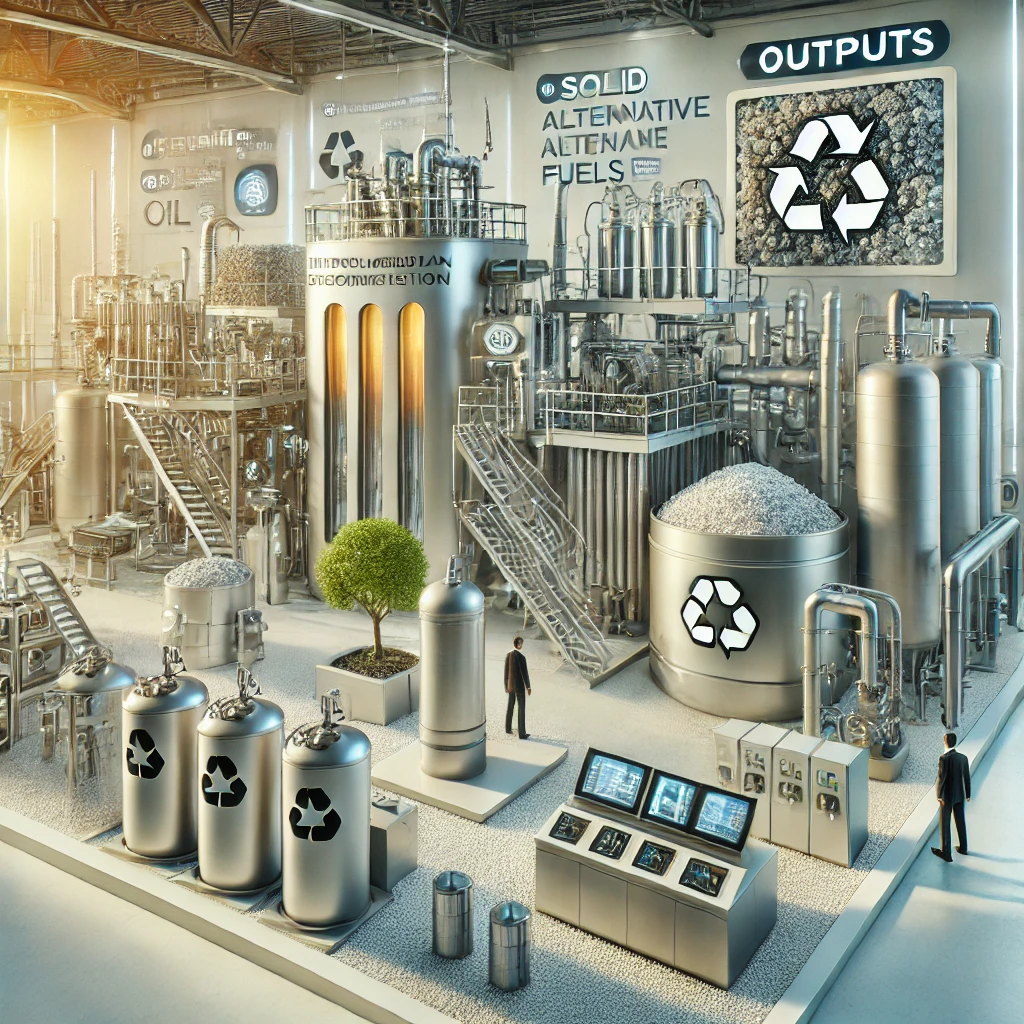
In the context of the global environmental crisis, modern waste processing technologies play a key role in creating a sustainable future. One such technology is thermal depolymerization, an effective method for processing organic high-molecular materials such as plastics, solid alternative fuels (SAFs), and sewage sludge. This technology offers a new level of solution to the problem of recycling complex waste and creating secondary resources with minimal impact on nature.
Thermal depolymerization is the process of decomposition of high molecular weight compounds (plastics, polymers, organic materials) under the influence of high temperatures and pressures in the absence of oxygen. As a result, long polymer chains are broken down and the materials are broken down into simpler compounds, such as:
These products can be used as secondary raw materials for industry, energy sources, or even as fuel for the energy sector.
1. Deep recycling of complex materials
2. Energy benefit
3. Environmental friendliness
4. Economic efficiency
5. Flexibility and scalability
6. Security and automation
7. Minimum balances
8. Stable product quality
Thermal depolymerization technology opens up new horizons for waste recycling. Its potential includes:
Its implementation can significantly improve the environmental situation in cities, reduce the number of landfills, and promote sustainable industrial development.
Ecological breakthrough in combating desertification: artificial cultivation of biological crusts (biocrusts) in the deserts of the PRC. Accelerated bioremediation technology from AVELife.

Research on the transfer of space technology of the PRC (Chang’e mission) to combat land degradation. How continuous basalt fiber (CBF) fixes the Gobi and Takla Makan deserts.

Analysis of China’s large-scale eco-engineering program. Basalt fibers, artificial biocrust, and agrovoltaics in the fight against the Gobi and Takla Makan deserts by AVELife.